
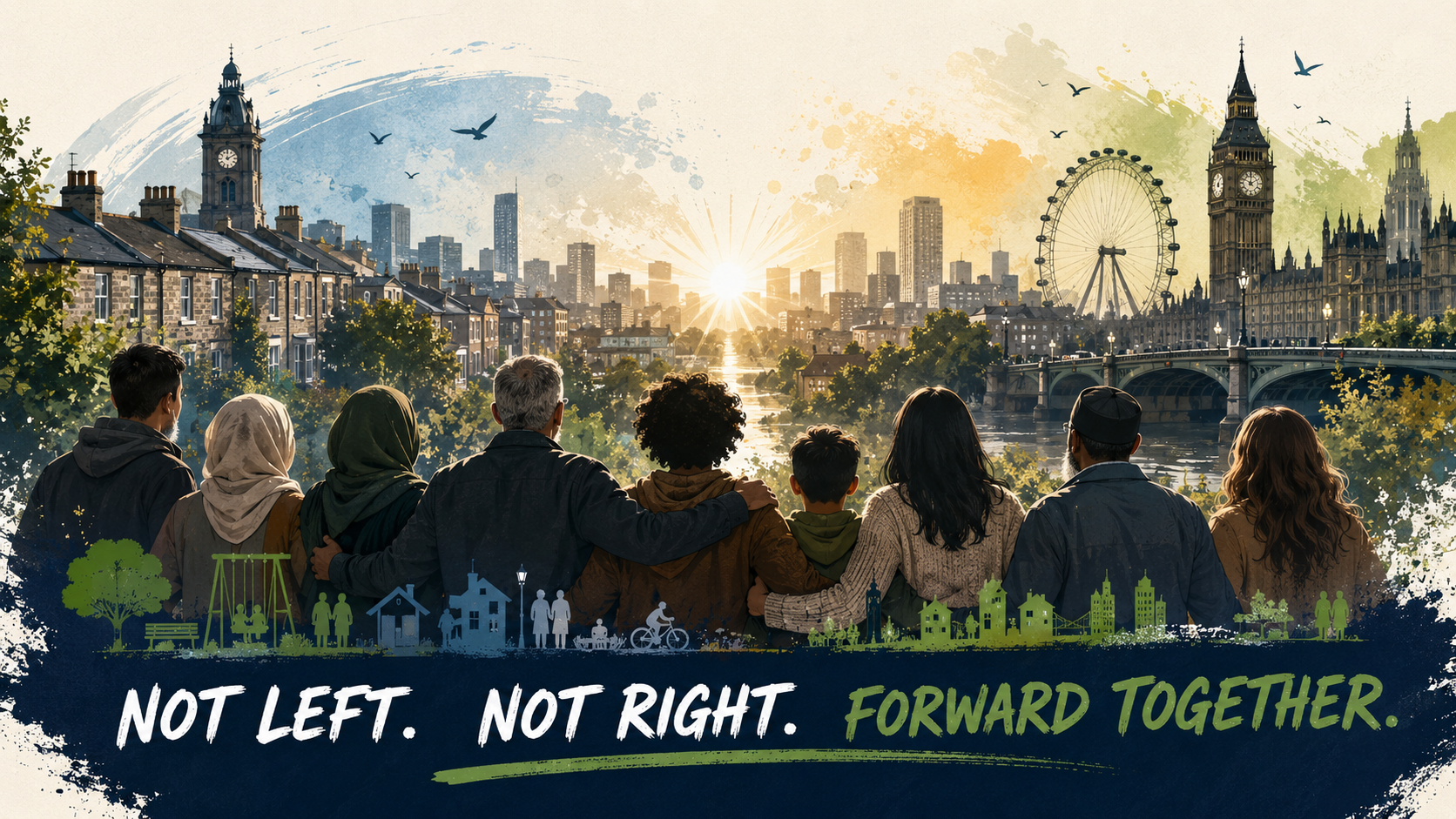
A personal reflection on three years in and around politics
Over the last three years, I have found myself becoming increasingly involved in politics in a way I never originally intended. Not as a career politician, not as someone chasing titles or positions, but simply as someone already heavily involved in the community who slowly began to realise that many of the problems people complain about every single day are rooted in political failure. During this period, I supported candidates directly in two elections before eventually standing myself in May 2026. I campaigned on the streets, knocked on doors, attended internal meetings, sat with party members, spoke to residents from every background, and observed closely how politics actually functions behind closed doors. The experience changed my understanding of politics completely.
Local and National Politics Are Not the Same
One of the biggest lessons I learnt is that local and national politics are not the same thing, and treating them as identical is a major mistake many communities make. National politics is ultimately about government formation, foreign policy, the economy, immigration, taxation, and the direction of the country overall. Whether people like it or not, national elections often become strategic exercises where voters choose what they believe to be the ‘best’ option under the current electoral system. Local politics, however, should operate completely differently. Local councillors are supposed to represent the direct interests of their ward — housing, roads, anti-social behaviour, youth services, local investment, planning issues, and the everyday concerns affecting residents. Yet increasingly, local politics has simply become an extension of national party warfare. Too many councillors are expected to act as representatives of party structures rather than representatives of the people who elected them. Decisions are often shaped more by internal party discipline than by the actual needs of the community.
The Failure of Party Politics
Over the last few years, trust in political parties has collapsed across Britain. This is not just something affecting Muslims or minority communities. Polling from the Electoral Commission and the National Centre for Social Research has repeatedly shown declining public trust in politicians and growing dissatisfaction with party politics generally. After seeing politics more closely myself, I understand why this distrust exists. Internal party politics can become deeply tribal. Good people often become trapped inside systems where loyalty matters more than honesty. Candidates become cautious because they fear disciplinary action, deselection, or reputational damage within the party. Over time, many politicians stop saying what they genuinely believe and instead say what is ‘politically manageable’. Once survival within the party structure becomes the priority, authentic representation begins to disappear.
Palestine Changed British Muslim Politics
The issue of Palestine accelerated this crisis dramatically, especially amongst British Muslims. For decades, many Muslims voted Labour almost automatically. In some communities it became inherited political behaviour rather than a carefully thought-through political position. But Gaza fundamentally changed that relationship for many people. The anger was not only about foreign policy; it was about dignity, hypocrisy, and the feeling that Muslim concerns were politically disposable. As Labour lost trust amongst many Muslims, a new political movement began emerging. Support shifted heavily towards Independents and, in some areas, towards the Green Party. That shift is very real. However, I increasingly believe many people are now making the mistake of replacing blind Labour loyalty with blind Green loyalty, and that is equally dangerous.
Same Problems, Different Colour
One thing my experience taught me is that political parties eventually begin protecting themselves institutionally. No matter how principled or idealistic a party may initially appear, once it grows, internal power struggles, disciplinary systems, reputation management, and pressure groups begin influencing decision-making. We are already seeing this inside the Green Party. In March 2026, a motion declaring “Zionism is racism” reportedly failed to pass at the party’s spring conference. At the same time, several controversies emerged involving Green Party members and candidates suspended over anti-Israel and anti-Zionist views. However, the broader pattern matters. Many Muslims left Labour because they believed the party machinery silenced or punished certain views around Palestine. Yet increasingly, people are beginning to notice similar tensions appearing elsewhere too. That does not mean Labour and the Greens are identical, but it does mean political parties often become institutional first and principled second once they begin growing in influence. This is why communities must think more deeply than simply moving inherited loyalty from one colour to another.
Why I Believe Local Politics Should Be Independent
After everything I have personally experienced, I genuinely believe local politics works best when it is independent. Not because independents are perfect, and not because every party politician is bad, but because independent local politics creates the best possibility for genuine accountability to residents rather than party headquarters. An independent councillor can disagree openly. They can vote according to local need rather than according to party instruction. Most importantly, they remain directly answerable to the people who elected them. I also strongly believe that local candidates should have some proven history of community involvement before entering politics. Politics should not become a career ladder or a bill-paying machine. Once somebody’s livelihood depends entirely on politics itself, there is always the danger that protecting their position becomes more important than protecting the people they represent. Communities need candidates who already understand local problems because they have actually been amongst the people long before election season arrived.
Another major conclusion I reached through campaigning is that many Muslims, particularly in places like Huddersfield, need much deeper political education. Not political propaganda, but genuine political education. Communities need to understand the difference between local and national elections, how councils actually function, what councillors can and cannot do, how party systems operate, and how political narratives manipulate emotions. Too many people still vote tribally. Others vote emotionally. Others simply follow whatever the wider community appears to be doing without carefully analysing the situation themselves. That has to change. Communities should vote thoughtfully, strategically, and independently.
What gave me hope during my own campaign was realising that support for independent politics is not limited to Muslims at all. One of the most eye-opening experiences for me was seeing how politically diverse my support base actually was. I spoke to Reform supporters who gave me one of their votes simply because they wanted a genuine alternative locally. I spoke to Conservatives who supported me personally despite disagreeing with me nationally. I had support from Labour voters frustrated with their own party, along with Lib Dem supporters, Green supporters, and many people who normally never vote at all. That taught me something very important: ordinary people are often far less divided than politics makes them appear. Most people simply want honesty, visibility, and someone who genuinely cares about the area.
Independents Can Work
There are already examples across the country showing that independent politics can work. Aspire in Tower Hamlets is one example. The movement has faced criticism and controversy, and it would be dishonest to pretend otherwise, but it has also delivered visible local policies and built a strong grassroots local base around community-focused politics. That model — rooted local political organisation focused directly on local needs — is something communities across Britain should seriously study. Another important example is Holme Valley North in Kirklees, where all three council seats were won by independents in 2026 despite the ward being overwhelmingly white demographically. That completely destroys the lazy assumption that support for independents is simply a ‘Muslim thing’. Across Britain, many communities are growing frustrated with traditional party politics and are looking for more authentic local representation.
One thing that disappointed me personally during my own campaign was the attempt by some activists to frame Crosland Moor as a simple ‘Green versus Reform’ contest, with the narrative being pushed that a vote for an independent risked allowing Reform to win. I never believed that narrative for a second because, unlike many people operating purely from political calculations and spreadsheets, I was actually in the community every day speaking directly to residents. I spoke to Muslims and non-Muslims in Crosland Moor. I spoke to residents in Crosland Hill. I listened carefully. And from the very beginning, I knew Reform was not realistically going to win Crosland Moor or even come close to winning it. The ward simply did not reflect that reality politically. Sometimes political parties understand data better than people, but sometimes communities themselves understand their own areas far better than political strategists do.
The Way Forward
After everything I have experienced over the last three years, my conclusion is clear. We need more independent local politics. We need politically educated communities. We need candidates with proven service and genuine roots in their areas. We need people who can work across communities rather than inflaming divisions for political gain. Most importantly, we need to stop giving blind loyalty to political parties simply because of branding, history, or emotion. National politics and local politics should be approached differently. Nationally, strategic voting may sometimes make sense under the current system. Locally, however, communities should feel confident backing credible independents who truly understand and represent their wards. Ultimately, local politics should belong to the people who actually live there — not simply to party machines.